
POSTSCRIPT
She's a wrap. Thank you reading & sharing. Here are some final thoughts. If you're late to the party and want to know more about me and my cricketing half-life, please read 'Letter to Ezra.'

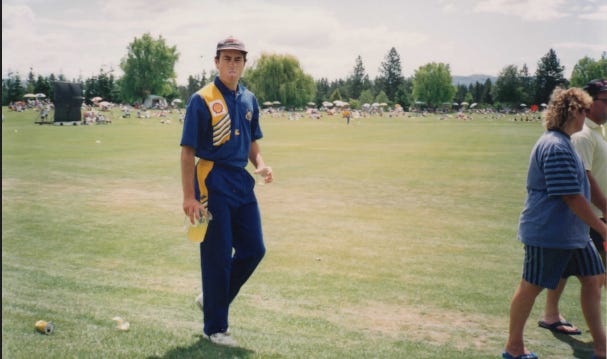
As I look back on these pieces, I feel very grateful. I reached out to teammates I hadn’t spoken to for 30 years and opposition players I had never spoken to at all. My goal was to explore their relationship with cricket and its role in shaping their lives. I had a set of stock questions but the initial part of the interview was usually devoted to reconnection and reminiscence and from there, we would digress wildly - sometimes I would forget (Damn you, Wine!) or abandon my questions and have to go back for another interview.
A number of themes materialised. As people reach 50, with a range of successes and failures under their groaning belts, they have largely accepted themselves and are more able to reflect on their earlier lives. Those who had stepped away from the game were more objective. These men enjoyed the chance to relive some of the camaraderie and key moments but could also look back and shake their heads at their younger selves. All expressed gratitude to the game and the lessons and opportunities it had provided.
The body of the interview usually began with family - sibling rivalry and the role of their parents. This often moved into a discussion of their own fatherhood. Mental health was another looming presence - the particular demands of cricket on the mind, young men drunk on the cocktail of machismo and masochism, and also the strain of leaving the game behind. But laughter was never far away.
Resilience, perhaps the greatest lesson of the game, was also embodied by the players. All suffered setbacks, several dropped out of the game only for its siren song to lure them back - Shane Bond listening to cricket on the radio while training at Police College, Aftab Habib rejected by Middlesex and lugging whiteware out of his uncle’s lorry, Mark Richardson spending a summer surfing, the 12 years between Jeff Wilson’s appearances for the Blackcaps, or Mark Butcher hitting rock bottom. Allied to resilience was their capacity for reinvention and the courage to take a risk - Dion Nash as founder of Triumph & Disaster, a luxury skincare range for men; Richardson from spinner to batsman to media chameleon; John Aiken from psychologist to Married at First Sight.
One surprise was the response of my subjects to the process. Many thanked me for “shaking loose old memories.” On several occasions when I shared my draft, I received an emotional response, as if I had unearthed something essential. I sensed with some that my approach was timely, that they had been looking to place stones - Andy Flower on racism and the toll of cricket on family; John Crawley devoting his Lord’s century to the memory of his mother; Adam Parore examining the mask he had worn, the persona he had adopted for the team. It was a privilege to listen and to give them space to consider themselves.
There were some regrets. I never included an Indian player. I followed several failed leads to Rahul Dravid - the only player of note from the India U19 team we played in 1992. While I wrote, he took the Team India job - one can only imagine the mountain of requests he receives. Heath Te Ihi o Te Rangi Davis is almost definitely the largest character any cricketer of my vintage played with or against. I admire the courage he showed when he shared his incredible story recently.
Ashley Mallett was always going to be my team’s spinner. Through the 80s, he ran coaching clinics in New Zealand with Dennis Lillee, and for some reason, he saw something in a boy from Timaru. His encouragement opened many of my life’s most interesting doors. I contacted him in mid-2021, and he remembered me. He said that he was fielding a lot of press from his recently released biography of Neil Harvey … and that he was undergoing chemotherapy. But he would happily answer any questions in writing. I held out for an interview. Mallett passed away that October.
Once again, thank you. I sat on these interviews for a time as I tried to find a traditional publisher. I am very glad I shared them. There have been some very kind words, including some from real writers whose work I admire. That means the world to a pretender like myself!
I’ll leave these pieces here for those who want to come back and read. Obviously, I’d love you to keep sharing them.
I may write a career retrospective with Steady. Let me know if that’s something you’d like to see. Otherwise, I’m on the lookout for another project. I certainly went through university with some interesting roosters …
Thanks for the series! While one can read player retrospectives on Cricinfo or other sports websites, your camaraderie with the interviewees gave this series a 'lived in' feeling that many journalists struggle to match.
Thanks again for an outstanding series JP. The insights and the deeply human angles made each piece compelling - and very enjoyable - reading. Please do go ahead with the bio on Steady.